目录
-
完成温湿度传感器虚拟实验
-
实验目标:
-
实验步骤:
-
认真观察实验过程
-
查看实验文档,了解DHT22ATTINY85元件分别有什么用途
-
登录https://wokwi.com/projects/,创建新项目 。 根据实验指导,完成电路的设计和连接。
-
运行实验,观察实验结果。
-
分析实验结果,总结电路原理和电子元件的作用。
-
-
运行效果如下
接线图
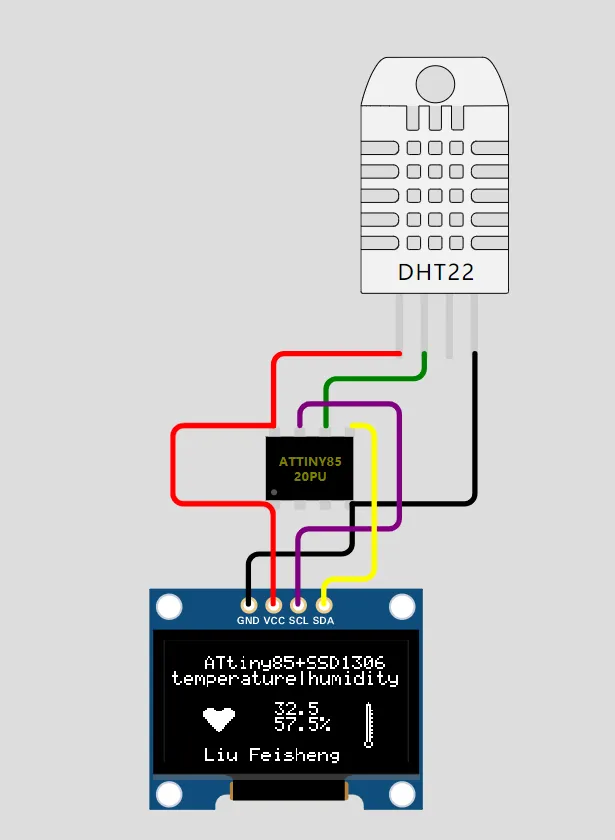
完成部分功能
初始化显示内容
代码如下
#include <dht.h>
#include <TinyWireM.h>
#include <Tiny4kOLED.h>

#define DHT22_PIN PB1

const unsigned char  img_heart_small[] PROGMEM = {
  0x00, 0x00, 0xc0, 0xe0, 0xe0, 0xe0, 0xc0, 0x80, 0x80, 0x80, 0xc0, 0xe0, 0xe0, 0xe0, 0xc0, 0x00, 0x00, 0x00, 0x00, 0x00, 0x01, 0x03, 0x07, 0x0f, 0x1f, 0x3f, 0x1f, 0x0f, 0x07, 0x03, 0x01, 0x00, 0x00, 0x00
};

const unsigned char  img_heart_big[] PROGMEM = {
  0xe0, 0xf0, 0xf8, 0xf8, 0xf8, 0xf8, 0xf0, 0xe0, 0xe0, 0xe0, 0xf0, 0xf8, 0xf8, 0xf8, 0xf8, 0xf0, 0xe0, 0x00, 0x01, 0x03, 0x07, 0x0f, 0x1f, 0x3f, 0x7f, 0xff, 0x7f, 0x3f, 0x1f, 0x0f, 0x07, 0x03, 0x01, 0x00
};

const unsigned char  img_thermometer[] PROGMEM = {
  0x00, 0xfe, 0x03, 0xfe, 0x50,
  0x00, 0xff, 0x00, 0xff, 0x55,
  0x60, 0x9f, 0x80, 0x9f, 0x65,
};

dht DHT;

void splash() {
  oled.clear();
  oled.setCursor(15, 1);
  oled.print(F("ATtiny85+SSD1306"));

  oled.setCursor(42, 3);
  oled.print(F("Example"));

  oled.setCursor(35, 7);
  oled.print(F("wokwi.com"));
}

void setup(){
  pinMode(DHT22_PIN, INPUT);

  oled.begin(128,64,sizeof(tiny4koled_init_128x64br),tiny4koled_init_128x64br);
  oled.setFont(FONT6X8);
  oled.clear();
  oled.on();

  splash();
  delay(3000);
  // prepareDisplay();
}

void loop(){

}
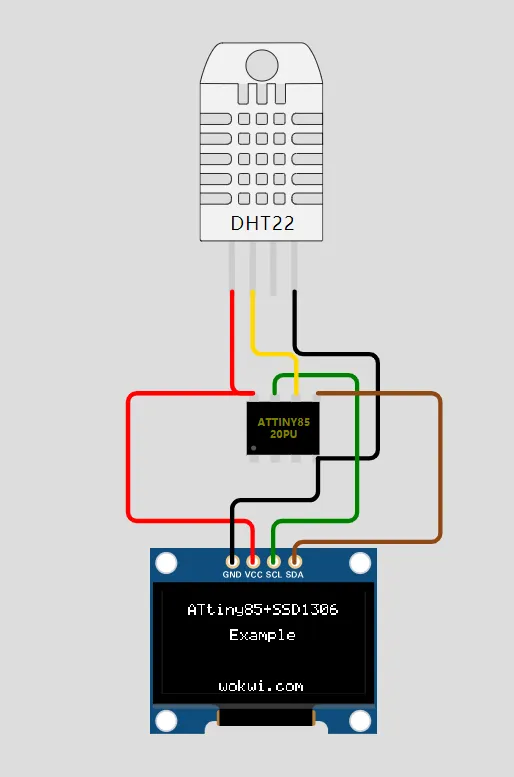
实验代码
#include <dht.h>
#include <TinyWireM.h>
#include <Tiny4kOLED.h>

#define DHT22_PIN PB1

const unsigned char  img_heart_small[] PROGMEM = {
  0x00, 0x00, 0xc0, 0xe0, 0xe0, 0xe0, 0xc0, 0x80, 0x80, 0x80, 0xc0, 0xe0, 0xe0, 0xe0, 0xc0, 0x00, 0x00, 0x00, 0x00, 0x00, 0x01, 0x03, 0x07, 0x0f, 0x1f, 0x3f, 0x1f, 0x0f, 0x07, 0x03, 0x01, 0x00, 0x00, 0x00
};

const unsigned char  img_heart_big[] PROGMEM = {
  0xe0, 0xf0, 0xf8, 0xf8, 0xf8, 0xf8, 0xf0, 0xe0, 0xe0, 0xe0, 0xf0, 0xf8, 0xf8, 0xf8, 0xf8, 0xf0, 0xe0, 0x00, 0x01, 0x03, 0x07, 0x0f, 0x1f, 0x3f, 0x7f, 0xff, 0x7f, 0x3f, 0x1f, 0x0f, 0x07, 0x03, 0x01, 0x00
};

const unsigned char  img_thermometer[] PROGMEM = {
  0x00, 0xfe, 0x03, 0xfe, 0x50,
  0x00, 0xff, 0x00, 0xff, 0x55,
  0x60, 0x9f, 0x80, 0x9f, 0x65,
};

dht DHT;

void splash() {
  oled.clear();
  oled.setCursor(15, 1);
  oled.print(F("ATtiny85+SSD1306"));

  oled.setCursor(42, 3);
  oled.print(F("Example"));

  oled.setCursor(35, 7);
  oled.print(F("wokwi.com"));
}

void heartBeat(){
  static char big = 1;
  static long startTime = 0;
  long currentTime;

  currentTime = millis();

  if((currentTime - startTime)>200){
    startTime = currentTime;
    big = 1- big;

    if(big){
      oled.bitmap(20,4,37,6,img_heart_big);
    }else
      oled.bitmap(20,4,37,6,img_heart_small);
  }
}

void prepareDisplay(){
  unsigned int i,k;
  unsigned char ch[5];

  oled.clear();
  oled.begin();

  oled.setCursor(20,1);
  oled.print(F("ATtiny85+SSD1306"));
  oled.setCursor(3,2);
  oled.print(F("temperature|humidity"));

  oled.bitmap(105,4,110,7,img_thermometer);
  oled.setCursor(57,4);
  oled.print(F("24.0℃"));
  oled.setCursor(57,5);
  oled.print(F("40.0%"));

  oled.bitmap(10,5,17,2,img_heart_small);
}

float getTemperature(){
  return DHT.temperature;
}

float getHumidity(){
  return DHT.humidity;
}

void setup(){
  pinMode(DHT22_PIN, INPUT);

  oled.begin(128,64,sizeof(tiny4koled_init_128x64br),tiny4koled_init_128x64br);

  oled.setFont(FONT6X8);

  oled.clear();
  oled.on();

  splash();


  delay(3000);
  prepareDisplay();
}


void loop(){
  static long startTime = 0;
  long currentTime;


  DHT.read22(DHT22_PIN);

  currentTime = millis();

  if((currentTime-startTime)>1000){
    startTime = currentTime ;

    float temperature = getTemperature();

    oled.setCursor(57,4);

    oled.print(temperature,1);
    oled.print("℃");

    float humidity = getHumidity();

    oled.setCursor(57,5);

    oled.print(humidity,1);
    oled.print("% ");

    oled.bitmap(105,4,110,7,img_thermometer);

    oled.setCursor(20,7);
    oled.print("Liu Feisheng ");

    heartBeat();
  }
}
完成实验报告填写
要求:1.完成以上接线
2.在屏幕的最后一行打上自己的名字拼音
扩展练习:
- 加上温度超过一定值时,红灯闪烁功能
扩展练习-加红灯闪烁功能-接线图
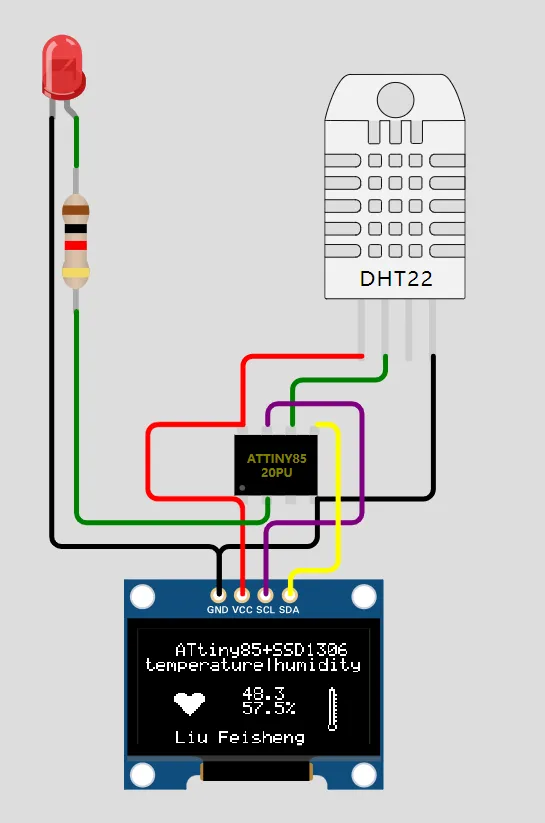
扩展练习代码
#include <dht.h>
#include <TinyWireM.h>
#include <Tiny4kOLED.h>

#define DHT22_PIN PB1
#define LED PB3

const unsigned char  img_heart_small[] PROGMEM = {
  0x00, 0x00, 0xc0, 0xe0, 0xe0, 0xe0, 0xc0, 0x80, 0x80, 0x80, 0xc0, 0xe0, 0xe0, 0xe0, 0xc0, 0x00, 0x00, 0x00, 0x00, 0x00, 0x01, 0x03, 0x07, 0x0f, 0x1f, 0x3f, 0x1f, 0x0f, 0x07, 0x03, 0x01, 0x00, 0x00, 0x00
};

const unsigned char  img_heart_big[] PROGMEM = {
  0xe0, 0xf0, 0xf8, 0xf8, 0xf8, 0xf8, 0xf0, 0xe0, 0xe0, 0xe0, 0xf0, 0xf8, 0xf8, 0xf8, 0xf8, 0xf0, 0xe0, 0x00, 0x01, 0x03, 0x07, 0x0f, 0x1f, 0x3f, 0x7f, 0xff, 0x7f, 0x3f, 0x1f, 0x0f, 0x07, 0x03, 0x01, 0x00
};

const unsigned char  img_thermometer[] PROGMEM = {
  0x00, 0xfe, 0x03, 0xfe, 0x50,
  0x00, 0xff, 0x00, 0xff, 0x55,
  0x60, 0x9f, 0x80, 0x9f, 0x65,
};

dht DHT;

void splash() {
  oled.clear();
  oled.setCursor(15, 1);
  oled.print(F("ATtiny85+SSD1306"));

  oled.setCursor(42, 3);
  oled.print(F("Example"));

  oled.setCursor(35, 7);
  oled.print(F("wokwi.com"));
}

void heartBeat(){
  static char big = 1;
  static long startTime = 0;
  long currentTime;

  currentTime = millis();

  if((currentTime - startTime)>200){
    startTime = currentTime;
    big = 1- big;

    if(big){
      oled.bitmap(20,4,37,6,img_heart_big);
    }else
      oled.bitmap(20,4,37,6,img_heart_small);
  }
}

void prepareDisplay(){
  unsigned int i,k;
  unsigned char ch[5];

  oled.clear();
  oled.begin();

  oled.setCursor(20,1);
  oled.print(F("ATtiny85+SSD1306"));
  oled.setCursor(3,2);
  oled.print(F("temperature|humidity"));

  oled.bitmap(105,4,110,7,img_thermometer);
  oled.setCursor(57,4);
  oled.print(F("24.0℃"));
  oled.setCursor(57,5);
  oled.print(F("40.0%"));

  oled.bitmap(10,5,17,2,img_heart_small);
}

float getTemperature(){
  return DHT.temperature;
}

float getHumidity(){
  return DHT.humidity;
}

void setup(){
  pinMode(DHT22_PIN, INPUT);
  pinMode(LED, OUTPUT);

  oled.begin(128,64,sizeof(tiny4koled_init_128x64br),tiny4koled_init_128x64br);

  oled.setFont(FONT6X8);

  oled.clear();
  oled.on();

  splash();


  delay(3000);
  prepareDisplay();
}


void loop(){
  static long startTime = 0;
  long currentTime;


  DHT.read22(DHT22_PIN);

  currentTime = millis();

  if((currentTime-startTime)>1000){
    startTime = currentTime ;

    float temperature = getTemperature();

    oled.setCursor(57,4);

    oled.print(temperature,1);
    oled.print("℃");

    if(temperature>40){
      digitalWrite(LED, HIGH);
    }
    delay(500);
    digitalWrite(LED, LOW);
    delay(500);

    float humidity = getHumidity();

    oled.setCursor(57,5);

    oled.print(humidity,1);
    oled.print("% ");

    oled.bitmap(105,4,110,7,img_thermometer);

    oled.setCursor(20,7);
    oled.print("Liu Feisheng ");

    heartBeat();
  }


}
扩展练习2:更换芯片和LCD显示屏
接线图
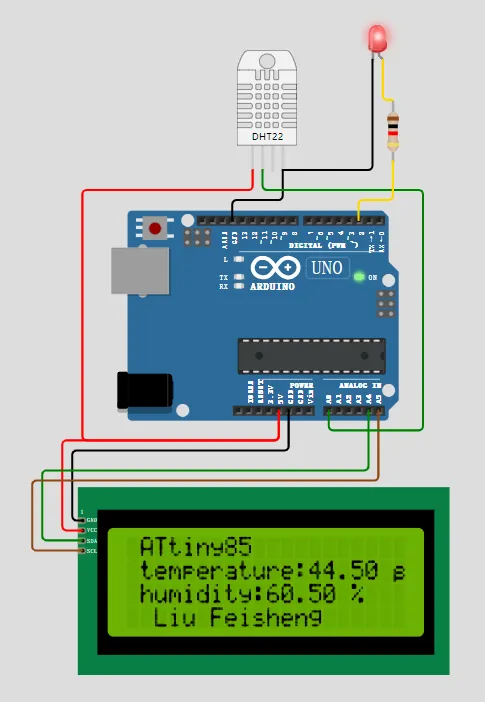
代码
#include <dht.h>
#include <LiquidCrystal_I2C.h>

LiquidCrystal_I2C lcd(0x27,20,4);

#define DHT22_PIN A0
#define LED 2


dht DHT;


float getTemperature(){
  return DHT.temperature;
}

float getHumidity(){
  return DHT.humidity;
}


void setup(){
  pinMode(DHT22_PIN, INPUT);
  pinMode(LED, OUTPUT);

  Serial.begin(9600);
  lcd.init();
  lcd.backlight();

  lcd.clear();
  lcd.setCursor(1, 0);
  lcd.print("ATtiny85");

  lcd.setCursor(1, 2);
  lcd.print("Welcome!");
  delay(3000);

}

void loop(){
  static long startTime = 0;
  long currentTime;

  DHT.read22(DHT22_PIN);

  currentTime = millis();

  if((currentTime - startTime )>1000){
    startTime = currentTime;

    float temperature = DHT.temperature;

    if(temperature>40){
      digitalWrite(LED, HIGH);
      // 如果温度高于40,红灯闪烁报警
    }
    String temperature1 = (String)temperature;
    lcd.setCursor(1,1);
    lcd.print("temperature:");

    lcd.print(temperature1);
    lcd.print(" ℃ ");

    String humidity = (String)DHT.humidity;
    lcd.setCursor(1,2);
    lcd.print("humidity:");
    lcd.print(humidity);
    lcd.print(" % ");


    lcd.setCursor(2,3);
    lcd.print("Liu Feisheng");


    delay(500);
    digitalWrite(LED, LOW);

  }


}
本文作者:liufeisheng
本文链接:
版权声明:本博客所有文章除特别声明外,均采用 BY-NC-SA 许可协议。转载请注明出处!
目录